


Welcome Messolonghi
Local Products
Are you a taster?
It is worth trying the local delicacies offered by the city of Messolonghi
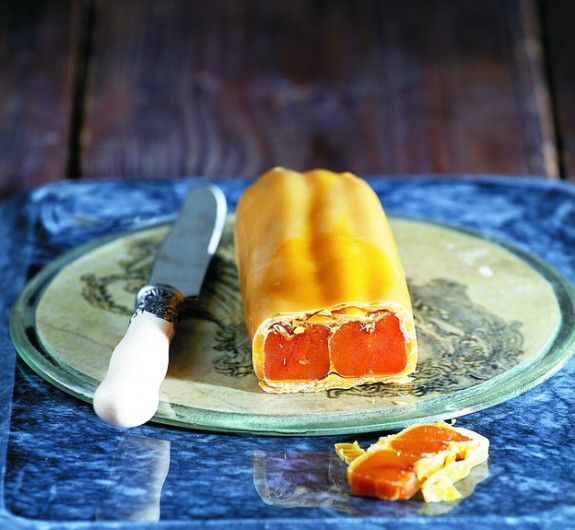
Bottargo of Messolonghi
Bottargo is located in the ovaries of the female fish Kefalos, which the locals call BAFA. The entire body of the roe is divided into two elongated and cylindrical lobes, which occupy about half of the body of the fish that contains them, surrounded by a thin film. After Bafa is caught, the following procedure is followed to extract the Roe: The fisherman holds the fish with its tail upwards and skillfully carves the lower part of its belly with a well-sharpened knife. Then with his fingers he drags the roe out of the visceral cavity. In order not to "spill" the roe, they separate it from the fish together with the genital pore. The roe is then rinsed from the blood - if possible with seawater - and "salted" with a pinch of salt. Simultaneously with pressures of his fingers, it is given to the roe four-sided shape, which is stabilized by placing wooden pieces. After the preparation mentioned above, the product is placed in special cages to be adequately ventilated. There they dry and become the well-known roe.

Eels of Messolonghi
The Messolonghi Lagoon is an ideal habitat for many species of ANCHILLA. Especially the eels of Messolonghi are considered one of the most delicious in Europe and are a very popular dish. The eels are shaped with a variety of lengths and weights and the most famous in Messolonghi are Souvlomytari, Kavatsa, Vitselouros, Katharohelo and Droggos. They are eaten boiled or grilled, on a spit or in the oven and are rarely pickled. The Mesolonghi also make delicious pedals. Much of the local production is exported to Italy.

Petal fish of Messolonghi
The petals are made in summer from sea bream, mullets and eels as follows: They open in the middle from the back to the abdomen and from the head to the tail. Both parts are held by the abdomen. Then they are salted, left for 3-4 hours in the salt, washed, the two parts are kept stretched with a slice of reed and dried in the shade ται They are kept for two - three days at most and eaten half-cooked, when they are not dry and raw.

Salted fish
The exceptional and protected by the Ramsar Convention wetland of the Messolonghi Lagoon is also famous for its fine fish. The eels, the mullet, the sea bass and the sea bream of Messolonghi, remaining in the shallows and with excellent composition and flora of the lagoon, acquire a special taste and flavor. When pickled they acquire greater value. The seeds are mainly grazed, but also sea bream, some species of cephalopods and eels. Especially salted seeds are famous for their gastronomic value.

Messolonghi Salt
The amazing in every way Lagoon of Messolonghi, offers the city another treasure: SALT. The shallow depth of its waters, depending on its high content of natural elements and the existence of suitable meteorological conditions, generously offer the possibility of creating highly productive Salts. So today there are two Salinas in Messolonghi: THE WHITE and that of TOURLIDA. The production of salt is done in natural preheaters with the method of continuous coagulation and the salt is harvested in Aspri Alyki mechanized, and in Tourlida by traditional means. The area used by Alykes is 14,000 acres and the annual production of Salt exceeds 130,000 tons. This means that Messolonghi produces more than 90% of the primary Salt in Greece.